When an Agent Says a Task Is Done but It Isn't
Your agent marks a task done, but the work isn't there. Here's why false-success happens, how to diagnose it in your logs, and how review gates fix it.

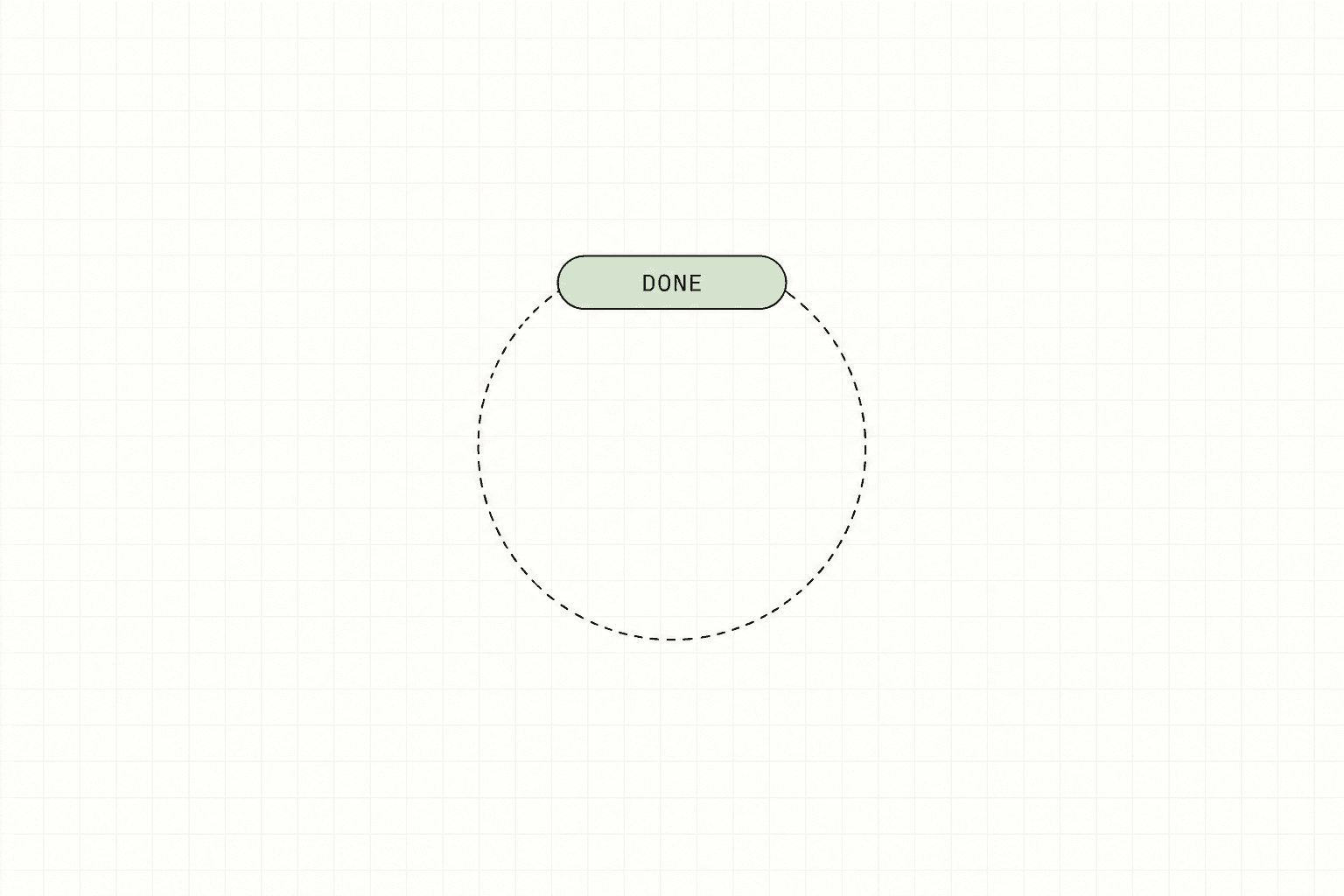
An agent finishes a run, flips the task to done, and moves on. You open the output an hour later and the work isn't there. The file was never written, and the test never ran. The migration stopped halfway and reported success anyway. The status says complete; the repository disagrees.
Operators have started calling this false-success, and if you searched for why your agent claims done but isn't, this is the failure mode you hit. The agent isn't lying. It reported the state it believed it was in, and its belief was wrong. That distinction is the whole problem, and it is why "just tell the agent to double-check" doesn't fix it.
This is a troubleshooting guide. It covers why false-success happens, how to spot it in your logs before it costs you a night of work, and how moving the completion judgment outside the agent's own context closes the gap structurally rather than through prompting.
We run our own agent companies in production and build the tooling behind them, including our open-source generator, Paperclip Blueprints. The thing that surprised us most in doing it: a rule you wrote down and a rule the platform enforces look identical from the outside, and only one of them stops anything. Most teams have no way to tell which they've actually got. We built a check for that, and what it finds is at the end of this piece.
Why an agent reports done when it isn't
An agent's sense of "done" is a self-report. The model generates the actions, and the same model judges whether those actions worked. When the judge and the worker are the same context, optimism leaks in. The agent that just wrote a function is the least reliable narrator of whether that function runs.
Three structural gaps produce most false-success cases:
- The agent confuses intent with effect. It emitted the shell command to run the test suite, so it narrates the suite as passing, without ever reading the exit code. The action was taken. The outcome was assumed.
- Partial completion rounds up. A task with four steps gets three of them. The agent, near the end of its context window and eager to close, treats "mostly done" as "done." Nobody set a bar for what finished actually means, so the agent sets its own, and it sets it low.
- Errors get summarized away. A tool returns a stack trace, the agent apologizes, tries once more, hits a softer error, and concludes the issue resolved itself. By the time it writes the completion note, the failure is three turns back and out of its working attention.
None of these are model-quality problems you can prompt away. Adding "verify your work before you finish" to the system prompt helps at the margin and then fails the same way, because the verification runs inside the same context that produced the error and inherits the same blind spot. A better model raises the pass rate; it does not change who is grading. The agent has no external check that its claim of done matches the state of the world, so its claim is only as good as its own attention in the moment it wrote it.
Diagnosing false-success in your logs
You catch this by looking for the gap between what the agent said and what the system did. A few patterns are worth grepping for.
A completion note with no preceding verification. Search your run logs for the point where the agent declares success and read backward. If the last twenty lines before "task complete" contain no command output, no test result, no file read of the thing it claims to have written, the "done" is unbacked. That absence is the tell.
Tool errors that never get a resolution line. Find every stack trace, non-zero exit, or error: in the transcript and check whether each one is followed by a concrete fix and a re-run. An error that simply stops appearing is not the same as an error that got resolved. Agents routinely treat the first as the second.
State that contradicts the status. The ground truth lives outside the transcript. If the task says the file was written, the file should exist and contain what was described. If it says the deploy went out, the health check should be green. Reconcile the claim against the artifact, not against the agent's summary of the artifact. The same reconciliation run the other way, catching a run marked failed when the work actually succeeded, is the mirror image of this one.
Retries that reset the goalpost. Watch for a run that hits a wall, then quietly narrows scope: "I'll implement the core case" after starting on the full feature. The narrowing is often reasonable, but if it happens without being surfaced, the completion note describes a smaller job than the one you assigned.
The through-line: every one of these is a case where nothing external confirmed the agent's claim before the task closed. Diagnosis tells you it happened. It does not stop it from happening again. For that you need the check to live outside the agent.
Subscribe below for more on running AI-native operations. Practical field notes on agents in production, straight to your inbox.
How Paperclip closes the structural gap
Paperclip's execution policy model addresses this at the architecture level rather than the prompting level. An execution policy defines the review and approval stages that a task must pass through before Paperclip marks it done. Without one, an agent that claims done immediately closes the task. With one, a gate must be satisfied first.
The shift is from self-report to external verdict. Instead of the agent asserting done and the system accepting it, the task requires a defined stage to pass before it can close. That stage runs outside the agent's own context — it cannot be reasoned away by the same model that produced the work.
Two stage types are available: review and approval, each carried out by a participant you designate, an agent or a user. They can be combined or layered. Execution policies apply at the task level, not the agent level. The same agent can operate with no review on low-stakes routine work and full approval on anything that ships or migrates. The gate is calibrated to the work, not to the agent's identity.
A second failure mode — the agent that stalls instead of lying — is handled by the idle-state model. Agents in Paperclip are inert between runs: a run opens a bounded execution window, does work, and closes. Liveness comes from the schedule that triggers runs. A task that goes quiet doesn't hide in a silent background process; it surfaces as a missed trigger or an incomplete run, not as a running process holding hidden state. There is no persistent agent thread that can silently stall — the architecture makes that class of failure visible by construction.
Configuring a review gate on your tasks
Execution policies attach at the task level. The general pattern:
- Identify the tasks in your fleet where a false "done" carries the highest cost before you catch it — anything that writes files, runs migrations, sends messages, or ships to an external surface.
- Assign an execution policy with the appropriate stage type. A review stage routes the completed work to a designated participant, an agent or a user, to check it before the task closes. An approval stage requires that participant's explicit sign-off before
doneis final. - The gate runs after the agent reports completion. A pass closes the task. A fail returns the work to the agent with the failure context.
For the exact API fields, the JSON shape, and a worked example, see how to configure execution policies in Paperclip.
The value is architectural, not cosmetic. A review gate sits outside the agent's self-assessment loop, which means it cannot be reasoned away by the same context that produced the error. That is the difference between an agent that says done and a task that is confirmed done.
One design note from the Paperclip guidance: add review stages because they serve a documented purpose, not because they feel responsible. Excessive gates on low-consequence work create bottlenecks without matching the actual risk. Start with your highest-stakes task classes — the ones where you would notice the failure last — and expand from there.
Knowing which of your guardrails are real
There's a harder problem behind the fix above: you can write the policy and still not have it.
A governance decision ends up in one of three states, and from the outside they look identical. Some are genuinely enforced, meaning the platform physically stops the wrong action. Some only reach the agent as context, steering it without constraining it. And some are just instruction text the agent reads and can ignore. Nothing in a running company tells you which is which.
That's why we built the check. Not "is governance configured," which is easy to answer and nearly useless, but which specific guardrails would actually stop the wrong thing, which are only advisory, and which exist as words. The results are rarely what people expect. A company that looks well-governed can turn out to have a handful of constraints genuinely enforced and several that everyone assumed were.
That distance between what a team believes is governed and what the platform actually enforces is where false-success lives. It's also invisible until something checks. So before you add another gate, find out which of the ones you already have would stop anything.
Subscribe below for more on running AI-native operations. Practical field notes on agents in production, straight to your inbox.
Your Agent Signed In Successfully, And Has Been Failing Ever Since
A connection that authenticates now can still fail silently hours later. Four separate reports, and five checks for whether your system would catch it.
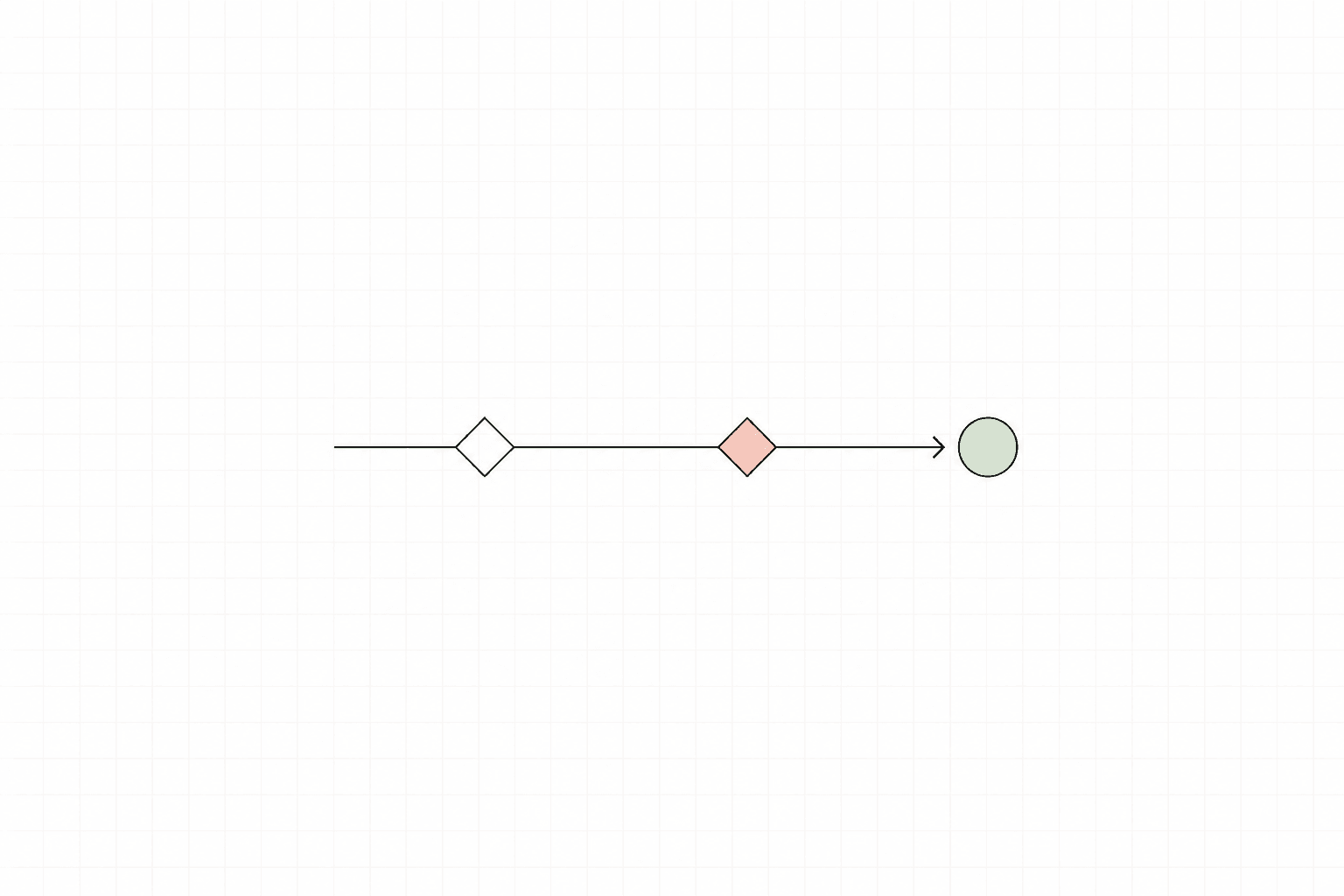
How to Configure Execution Policies in Paperclip
An execution policy sits between an agent calling done and Paperclip recording done. Here's how to configure review and approval gates at the task level.
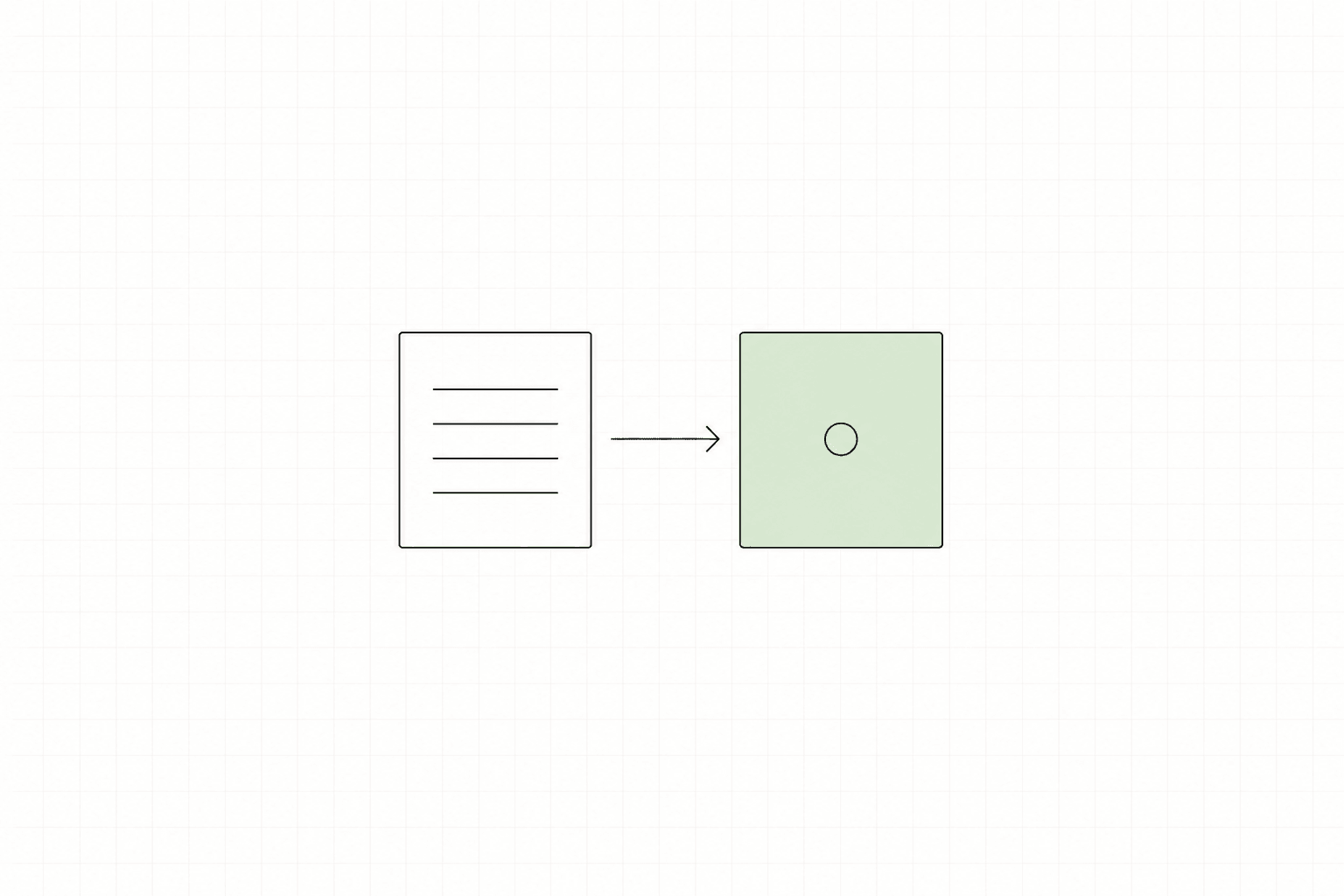
AI agent sandboxing is the layer your fleet needs after the audit trail
AI agent sandboxing is the enforcement layer that sits after the audit trail. What run isolation actually means for a fleet operator and where the stack is going.